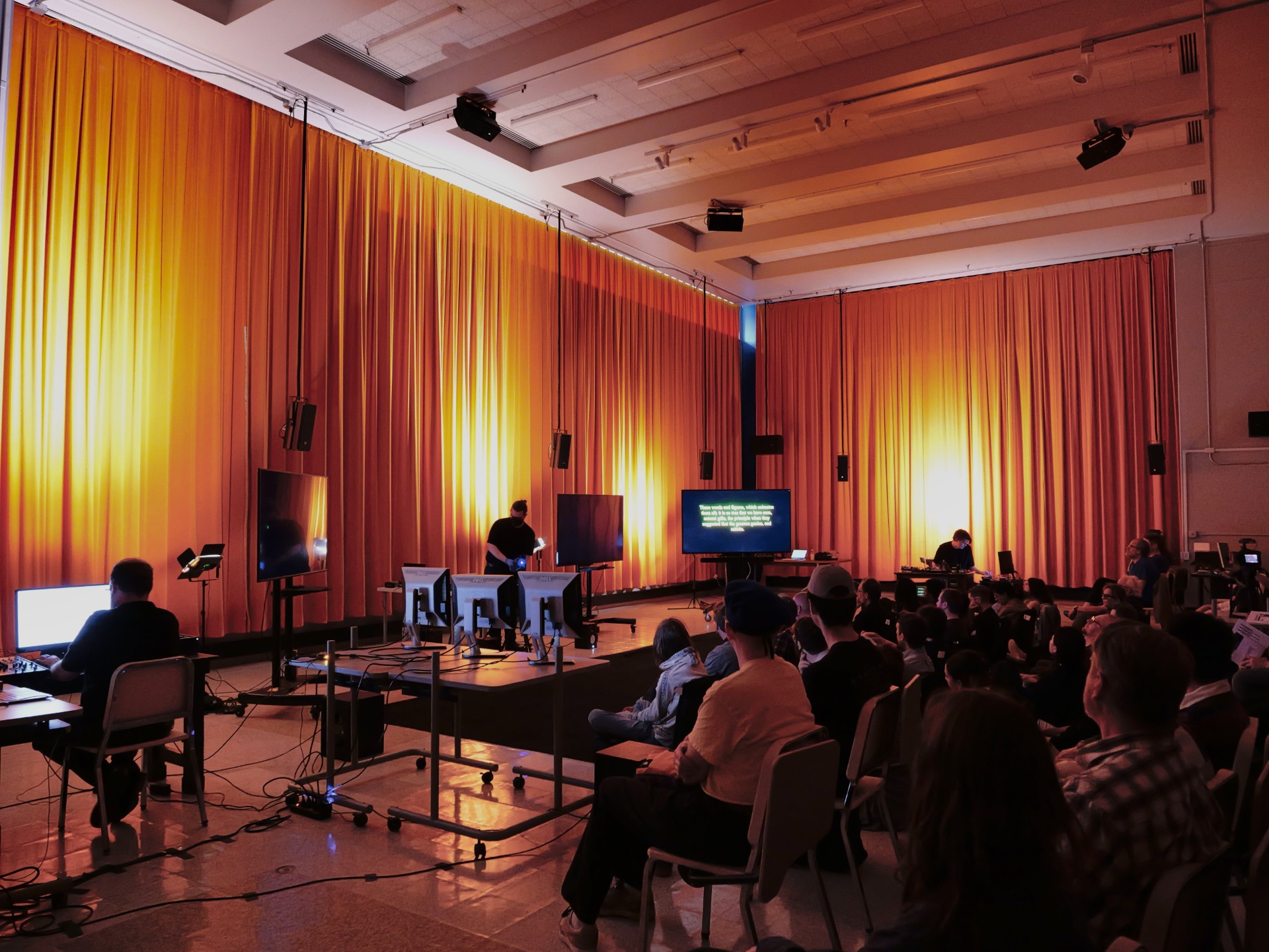
A defining trend in contemporary digital technologies is the deliberate concealment of how our devices actually work. These “black boxes”—systems understood only through their inputs and outputs—shape our current moment, from artificial intelligence to facial recognition algorithms. Access to their inner workings remains largely restricted to specialists, experts, and corporations with the necessary knowledge or permissions. Whether hardware, code, or signals, we are increasingly disconnected from the material realities of media.
Throughout my MFA, I have committed myself to an ongoing dialogue with machines, collaborating with them to generate audiovisual performances. This exchange unfolds both at a material level—through opening and examining how these tools function—and within the broader culture of tool-making that shapes them. The work shown this evening marks the culmination of these layered relationships with media. Signal Diagnostics is a conceptual project that seeks to open and demystify black-box systems.
Over the course of this performance, a series of experiments occurs that probe and gut media at varying scales. “Signals” are three performative movements in which performers improvise using purpose-built instruments designed to amplify the technological operations of three media objects into audible sound. “Diagnostics” are video interludes generated in real time by computational systems and draw on media-historical discourses. See man.A.machine.txt, _nipkow_, and _coin_. Together, these elements work to unsettle the opacity of black-box technologies, situating the viewer in an embodied awareness of the temporal, material, and energetic conditions that underlie contemporary media technologies.
Signal Diagnostics had its debut on April 22nd, 2026 in the Intermedia Space in Slee Hall on University at Buffalo's campus.
Instruments:
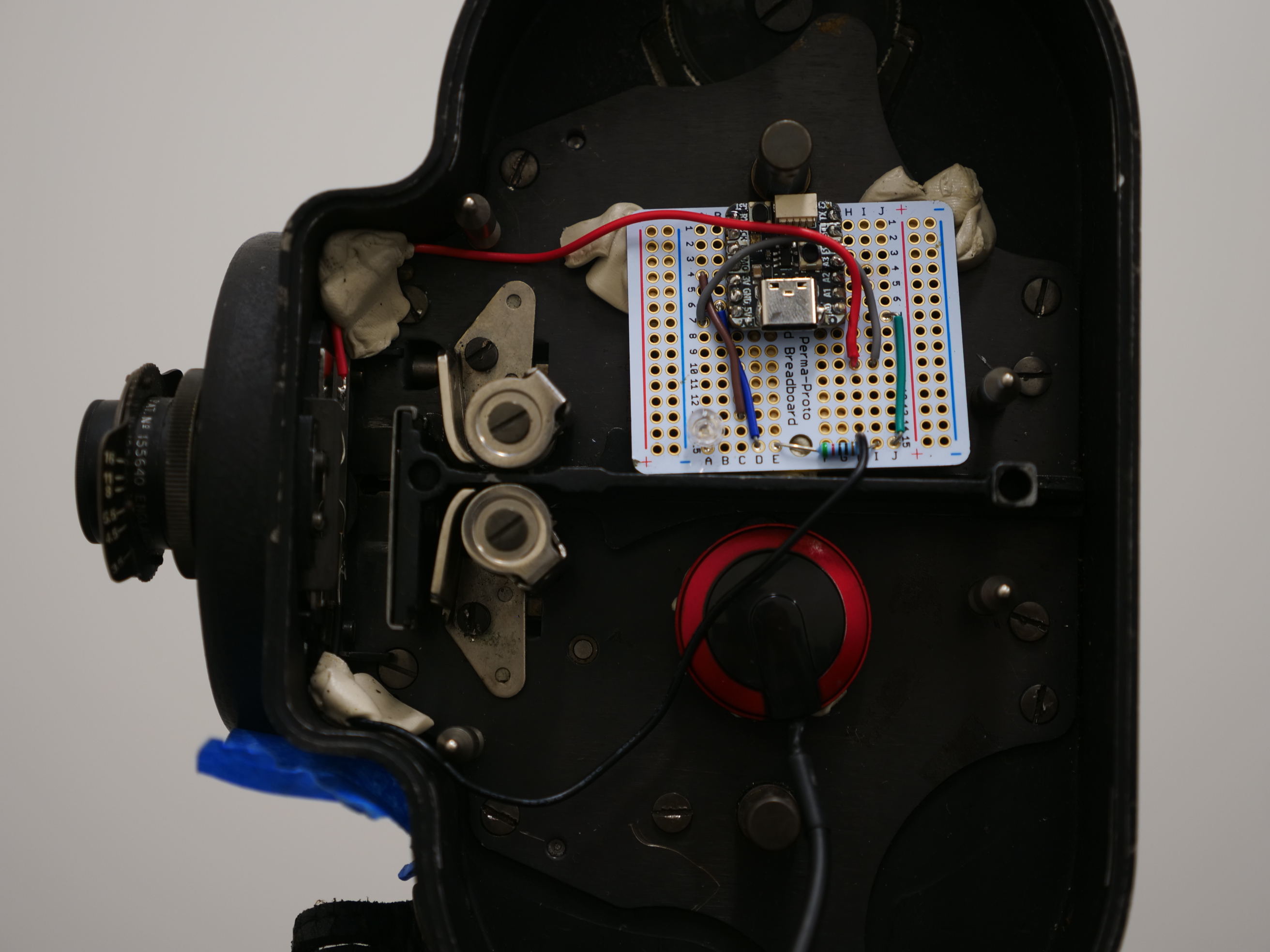
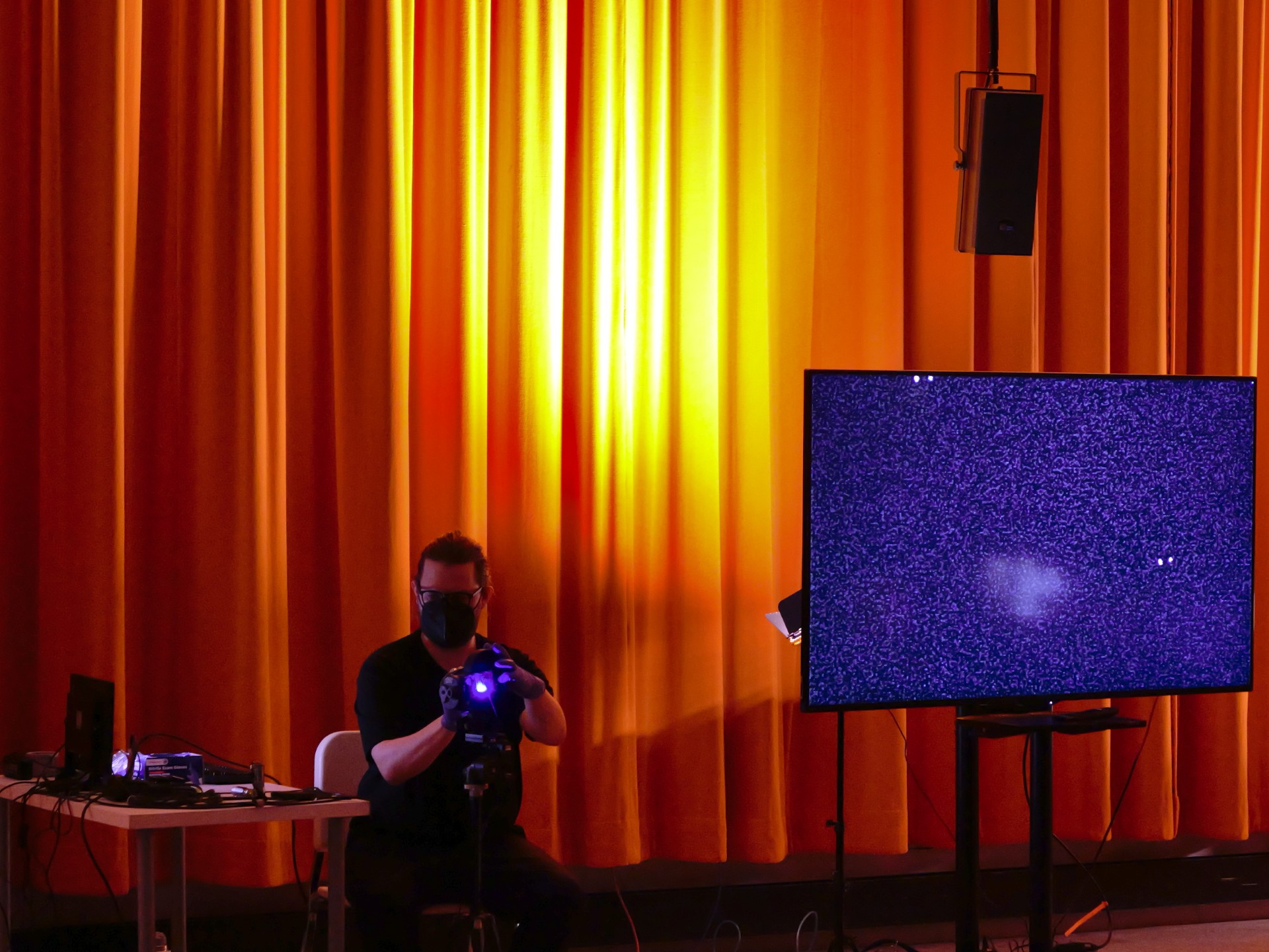
Bell and Howell Filmo 70a
performed by Ryan Bell
This instrument repurposes a semi-working 16mm cinema camera from the 1920s using a circuit that converts the light entering the camera into numerical data. This data is then used to filter audio captured by a contact microphone placed inside the camera's cast-iron body.
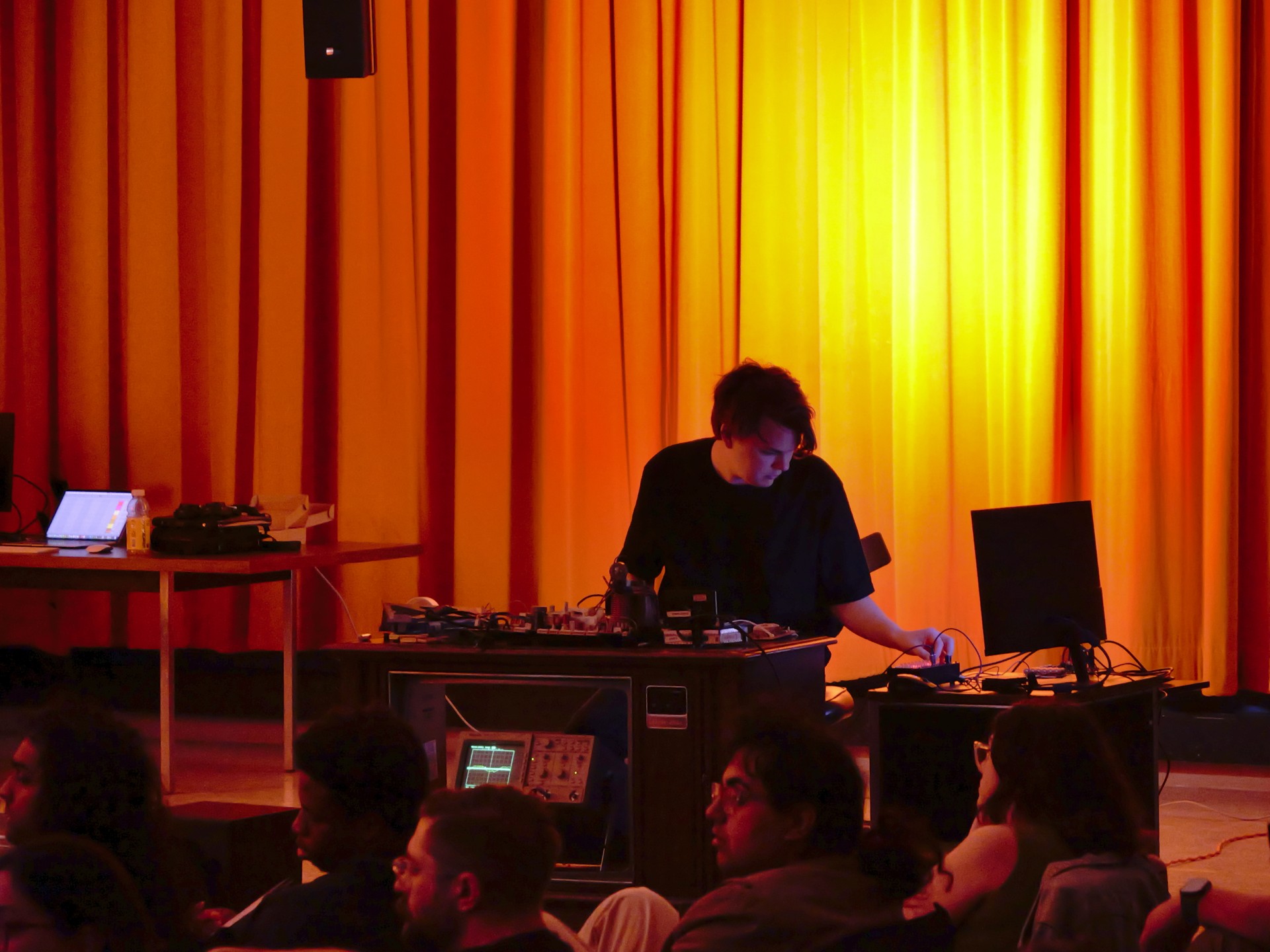
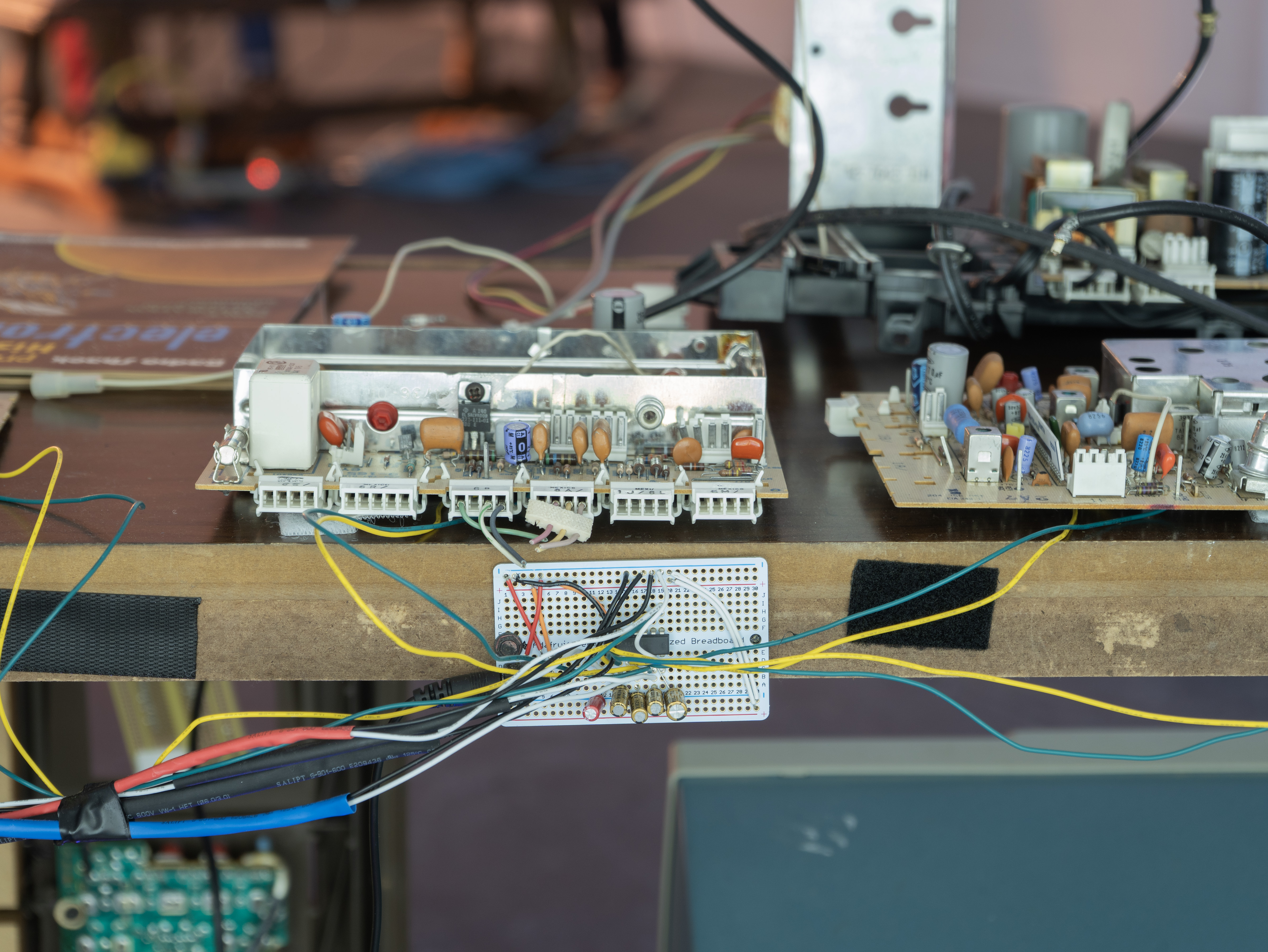
Zenith Space Command 3
performed by James Pardue
This instrument was created from the electronic remains of a Zenith television. I found the set outside a gutted house when I first moved to Buffalo. Although the cathode-ray tube had exploded at some earlier point, the electronic circuit boards remained relatively intact. These boards were circuit-bent into a feedback circuit that sends signals back through them, allowing the discarded components to shape the signal into an audible electronic tone.
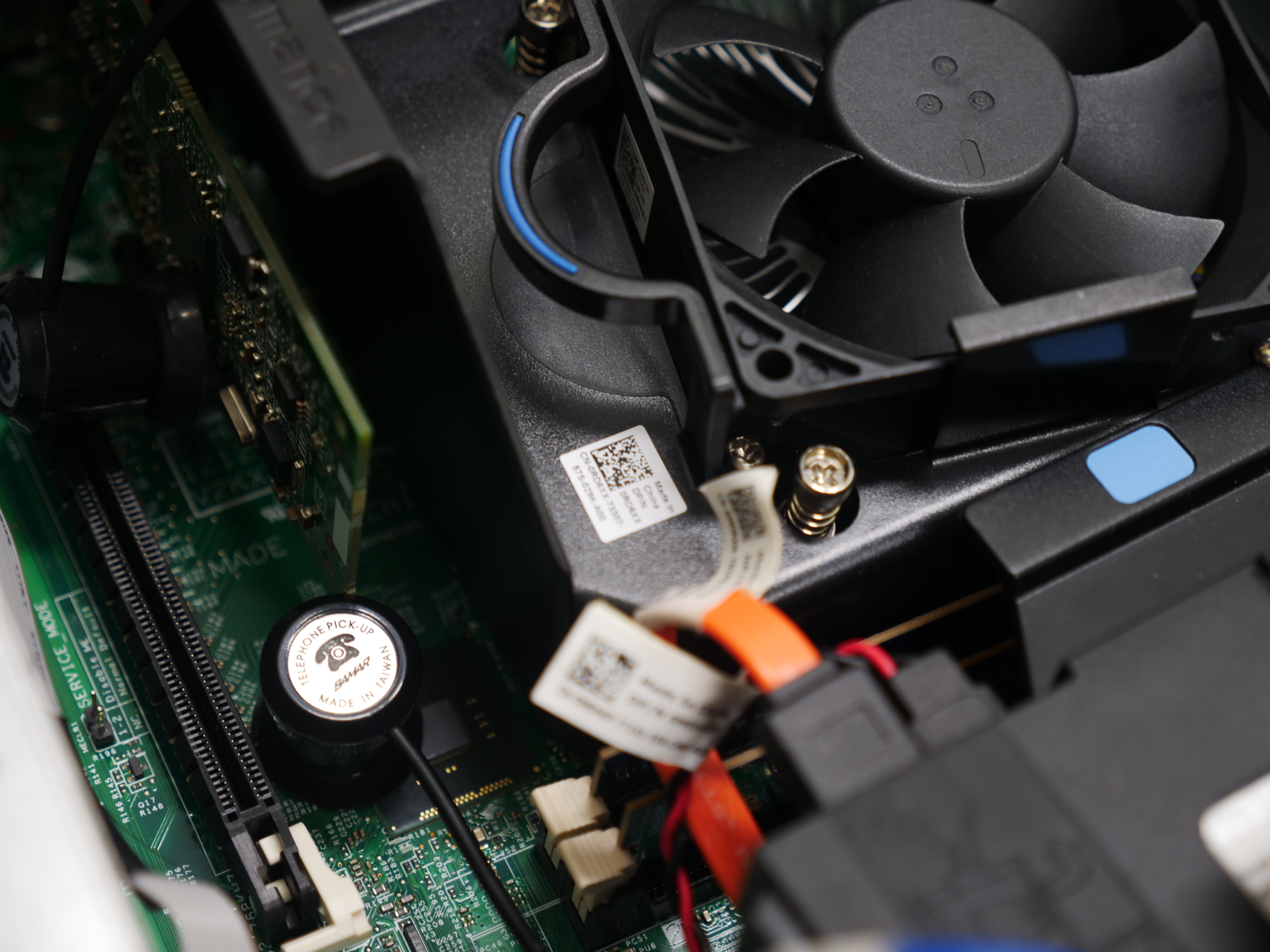
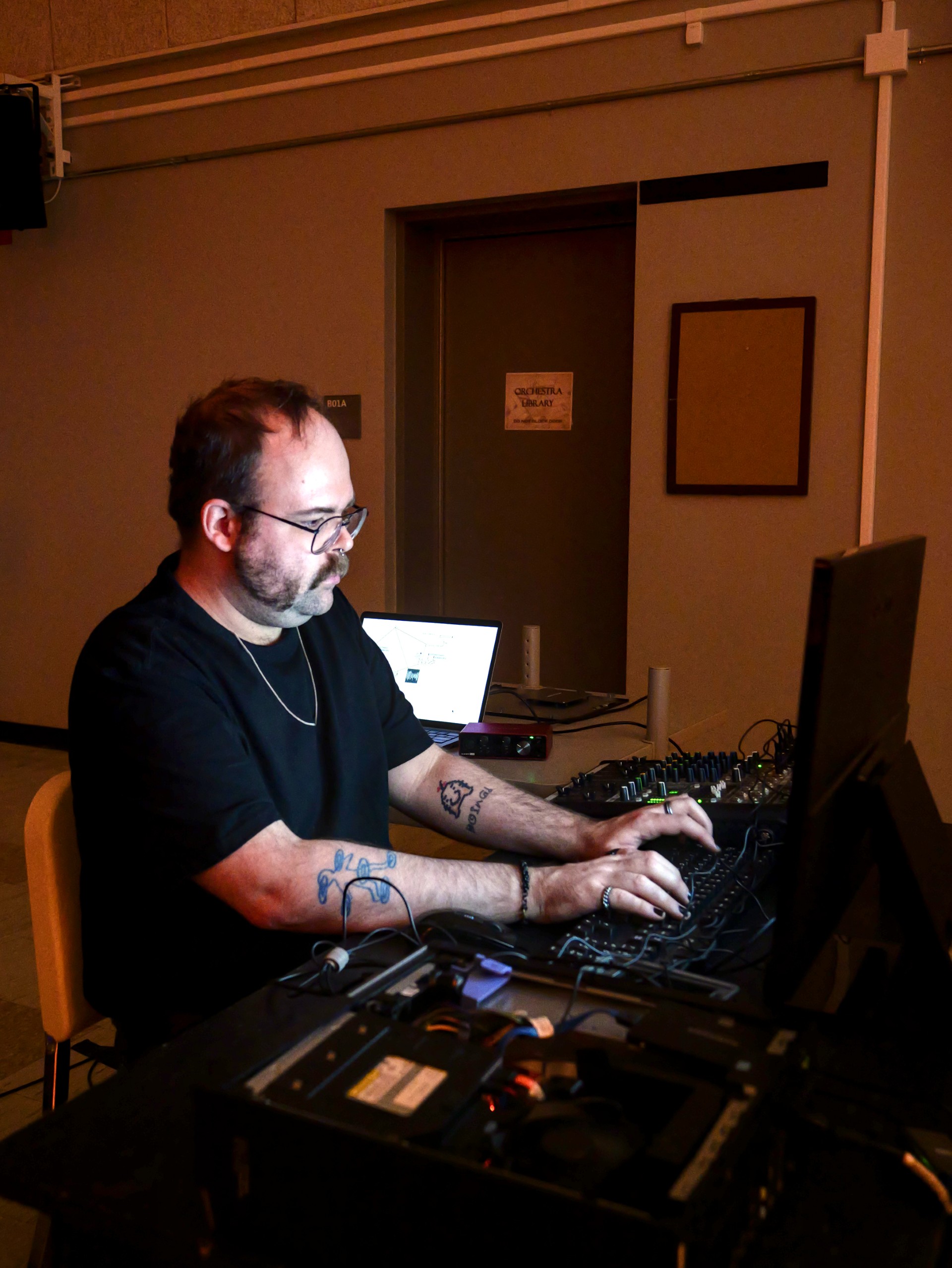
Dell Optiplex 3020
performed by Tim Georger
Inside this working desktop computer are telephone pickup coils—copper microphones that capture the computer's electromagnetic fields and make them audible. As the user interacts with the computer, different electromagnetic activity produces an evolving range of sounds.